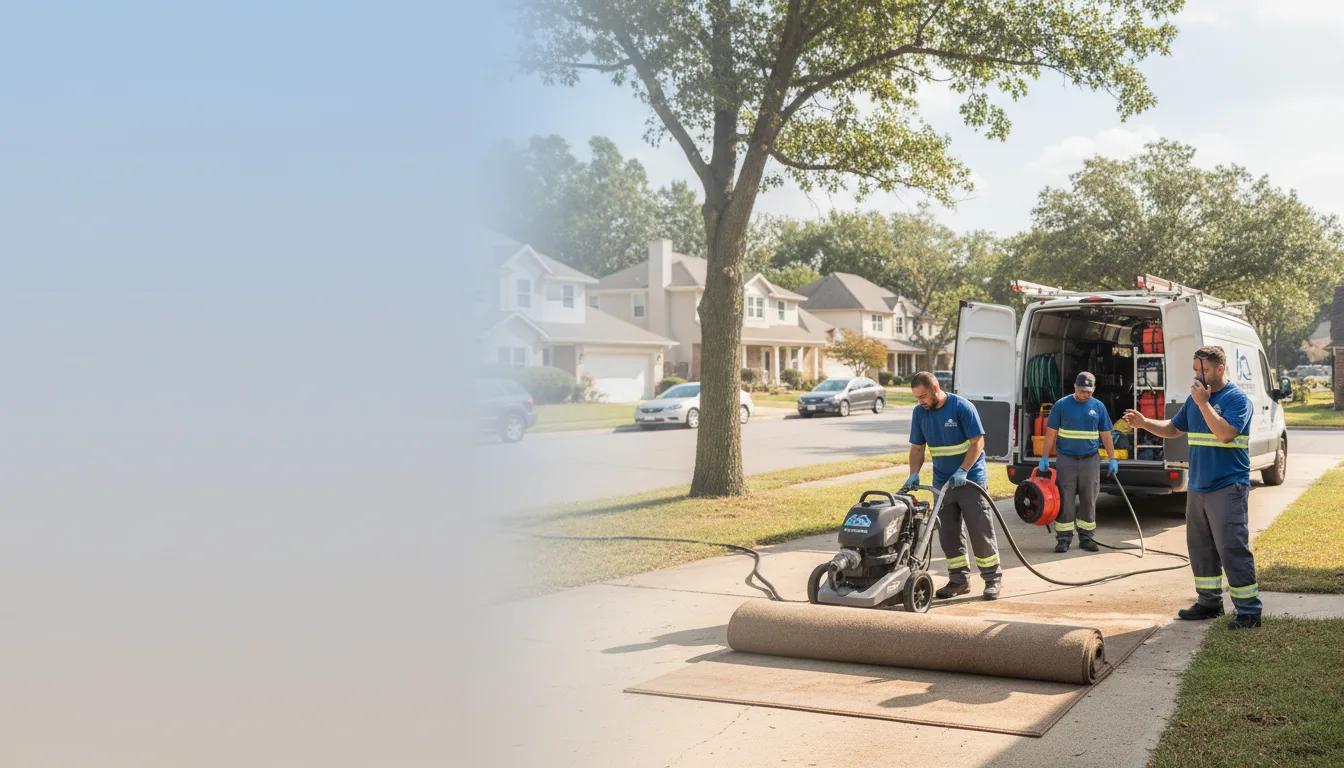
Hardwood floor water damage shows up as cupping, where the edges of each board rise above the center. It happens because the bottom of the board got wet and swelled while the top stayed dry. Leave it long enough and the boards can crown, buckle or pull off their nails.
Not every wet hardwood floor has to come out. Solid oak or maple that cupped from clean water can often be saved with the right drying. Our crew uses hardwood drying mats, which seal to the floor and pull moisture up through the boards under vacuum, along with LGR (/services/dehumidification) in the room. We take readings on the wood and the subfloor below and compare them to a dry area of the same floor. It takes patience, often a week or more. Once the boards are back near their normal moisture content, many of them flatten, and a light sand and refinish handles the rest.
Engineered hardwood is harder to save. Its thin wear layer over plywood or HDF can delaminate when wet. Laminate and click-lock vinyl plank are different again: water gets trapped under them, so they usually come up so the subfloor can dry.
Utah's dry air matters here too. A floor that was never acclimated gaps in winter and swells in summer, and a water event makes that worse. Dishwasher and fridge leaks are the classic source, so also see kitchen and dishwasher leak cleanup. Call (385) 853-1062 before you pull any boards.